

Participating in the City Rail Link (CRL) emergency evacuation testing, providing lived-experience feedback on Deaf accessibility, visual emergency information, NZSL communication and passenger safety.

Alt text: Tauri wearing an Auckland Transport safety vest inside a CRL station during emergency evacuation testing.
My role was to observe, participate, and provide practical feedback on how emergency procedures, communication, signage, alarms, and evacuation information could work for Deaf and hard-of-hearing passengers.
Being inside the tunnel and train environment gave me a valuable perspective that cannot always be captured through plans, policies, or simulations alone. I was able to consider what a Deaf passenger would actually see, understand, and experience during an emergency.
Some of the key areas I observed included the need for stronger visual emergency alerts, clear screens, universal symbols, accessible instructions, and communication that does not rely primarily on sound or spoken announcements.
For Deaf passengers, accessibility during an emergency is about more than simply having information available. It needs to be visible, immediate, clear, and understandable when people may be under pressure.
This experience was another step in my ongoing work advocating for accessible public transport and better outcomes for Tāngata Turi. It also highlighted the importance of including Deaf people and people with lived experience directly in the design, testing, and improvement of major transport projects.
The CRL is more than tunnels, trains and stations. It is about creating a transport network where everyone can travel with confidence, dignity, and safety.
He ara haumaru mō te katoa — a safe pathway for everyone.
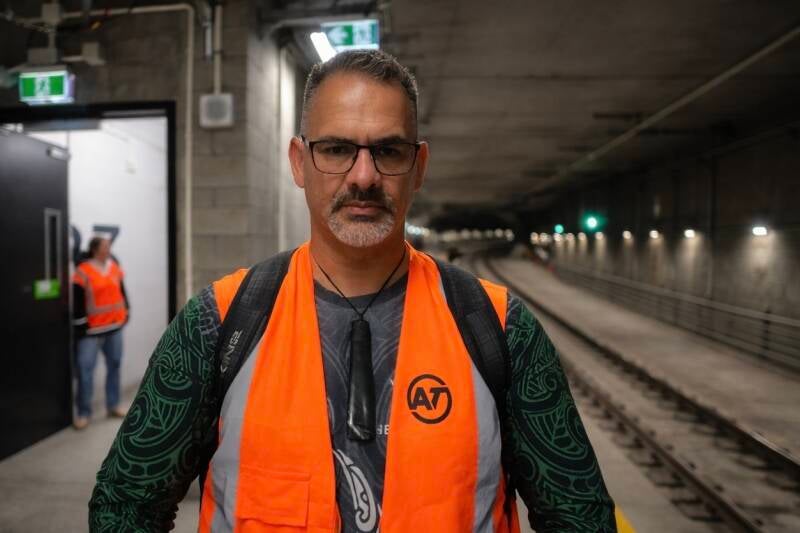
Alt text: Tauri in an orange high-visibility vest and backpack stands beside CRL tracks in a tunnel.